
Why Your Pasture Looks Uneven in Spring (And What It’s Telling You)
Quick Reference Tools:
The Story Your Pasture Is Telling You
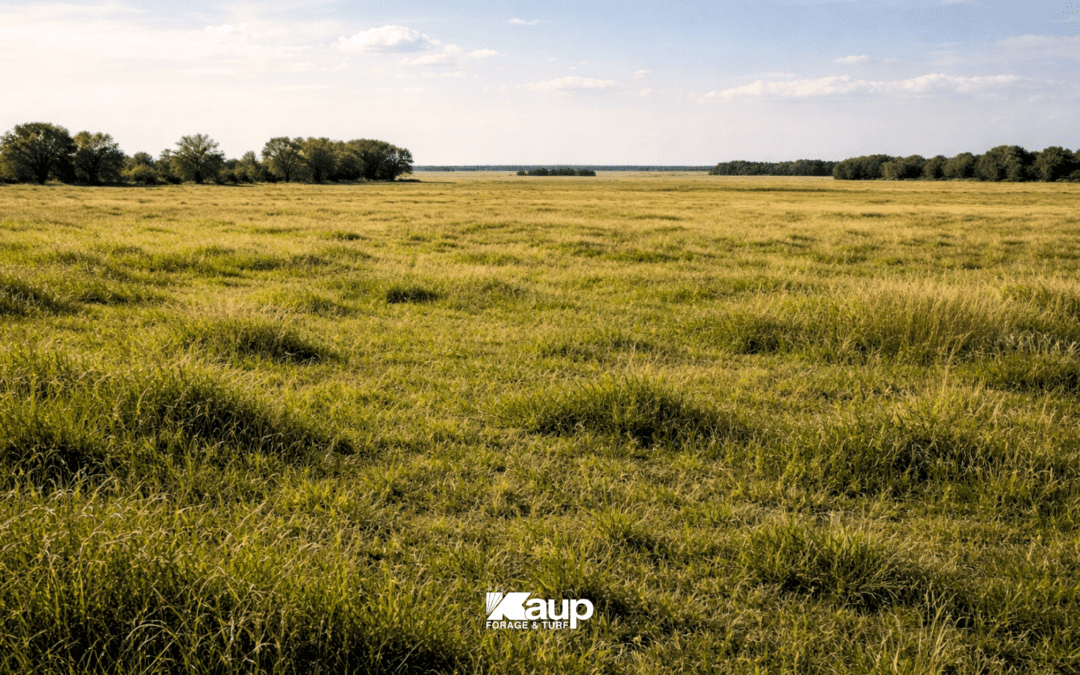
Walk across your Nebraska pasture in mid-April and you’ll see it: thick, lush growth in some areas, bare spots in others, patches where grass barely reaches ankle height while neighboring sections are already knee-deep. It looks like a problem. It feels like failure.
It’s neither.
Patchy spring pastures are common across Nebraska—especially after variable winters, inconsistent moisture, or seasons where grazing pressure wasn’t perfectly managed. What you’re seeing isn’t a crisis requiring immediate overhaul. It’s information. Your pasture is communicating exactly what happened last season, what’s happening in the soil right now, and what needs attention before problems compound.
The producers who succeed long-term aren’t the ones with perfect pastures every spring. They’re the ones who know how to read what uneven growth patterns mean, distinguish between issues requiring immediate action versus natural variation, and make informed decisions that prevent small imbalances from becoming expensive renovations.
This guide will teach you that skill. By understanding what causes uneven pasture emergence, how to interpret spring growth patterns specific to Nebraska conditions, and when intervention makes economic sense, you’ll transform spring pasture assessment from a source of stress into a strategic planning tool.
Section 1: What Causes Uneven Pasture Growth in Nebraska
Understanding why your pasture looks patchy starts with recognizing that spring growth isn’t just about what’s happening now—it’s the culmination of everything that occurred over the past 12 months.
Grazing Pressure: Last Season’s Decisions Show Up This Spring
The most common cause of uneven spring growth is uneven grazing pressure from the previous season. Here’s how it creates the patchwork you’re seeing now:
Overgrazing concentrated areas depletes root reserves. UNL Extension research explains that perennial grasses rely on nutrients stored in roots during fall to initiate spring growth. When areas were grazed too hard last season—especially late in the year before plants could go dormant—those root reserves were depleted. Even with adequate spring moisture, these stressed areas lack the energy to produce vigorous early growth.
The mechanism works like this: Initial grass growth in spring comes from energy reserves stored in roots and crowns, not from photosynthesis. If last year’s grazing removed leaf area before plants could adequately photosynthesize and replenish reserves, you’ve essentially starved the plant’s spring startup battery. Recovery takes time—often an entire growing season or more.
Traffic patterns compound the problem. Cattle don’t graze uniformly. They create well-worn trails between water, shade, and preferred grazing areas. These high-traffic zones experience concentrated hoof impact, preferential grazing (taking repeated bites from the same plants), and localized soil compaction. Come spring, these paths show up as weaker, slower-emerging strips cutting through your pasture.
Selective grazing creates cycles of degradation. Cattle preferentially graze the most palatable, highest-quality grasses. If grazing management doesn’t force cattle to take more uniform bites across the pasture, they’ll hammer the good stuff repeatedly while avoiding less palatable species. Over time, this creates a feedback loop: desirable species weaken from overgrazing, less desirable species and weeds fill the gaps, creating even more selective grazing next season.
This is especially problematic in Nebraska’s smooth bromegrass pastures during spring. Brome is extremely palatable when young and tender. Without rotational grazing management, cattle will graze favorite areas down to nothing while leaving mature, less palatable sections untouched—creating the classic “patch quilt” appearance by May.
Soil Compaction: The Silent Productivity Thief
Compaction is particularly insidious because it’s invisible until spring growth patterns reveal it. Then producers realize the damage was done months or even years ago.
How compaction develops in pastures: Unlike cropland, where compaction is obvious from equipment traffic, pasture compaction happens slowly and furtively. Each hoof exerts tremendous pressure on a small area—often more pounds per square inch than a tractor tire. In overgrazed pastures, increased animal traffic (searching for bites when grass is short) multiplies hoof impacts across the same areas repeatedly.
The impact is cumulative. Research shows that livestock traffic in the upper 3-4 inches of soil increases bulk density over time, reducing pore space that roots, water, and air need. Compaction doesn’t happen overnight—it’s the product of years of management patterns creating zones where soil structure has degraded.
Nebraska conditions amplify compaction risk: Nebraska’s freeze-thaw cycles, combined with clay-heavy soils in eastern regions, create particularly challenging conditions. When cattle graze on saturated spring soils (common in April after snow melt), each hoof impact compresses wet soil particles together. As soil dries, this compaction locks in place, creating dense layers that roots struggle to penetrate.
Compacted zones show up in spring as:
- Slower green-up compared to surrounding areas
- Thinner stands with more bare ground
- Stunted growth even when moisture is adequate
- Water pooling or running off rather than infiltrating
- Weed invasion (compaction-tolerant species like plantain, dandelion)
Common compaction hotspots:
- Around water sources and feeding areas (constant concentrated traffic)
- Gate areas and alleyways (daily movement patterns)
- Shade zones under trees (loafing areas during hot weather)
- Along fence lines (pacing, congregation zones)
The challenge with compaction is that typical remediation strategies (aerati on, tillage) provide only temporary relief in pasture situations. As soon as grazing resumes under the same management that caused compaction initially, the problem returns. Long-term solutions require addressing the grazing management that created compaction, not just the symptom.
Moisture Differences: Topography Tells the Story
Nebraska pastures rarely have perfectly uniform topography, and spring moisture distribution follows those contours.
Microclimate variations within fields: Even in seemingly flat pastures, subtle elevation changes of 6-12 inches create dramatically different moisture regimes. Low spots accumulate snowmelt and spring runoff, maintaining higher soil moisture through April and May. Ridge tops and south-facing slopes dry out faster, especially during windy spring conditions common across Nebraska.
Cool-season grasses respond rapidly to these moisture differences. In wet springs, low-lying areas may show lush growth while ridges appear sparse. In dry springs (like much of 2024-2025), the pattern reverses—deeper-rooted grasses on upland positions access subsoil moisture while shallow-rooted vegetation in historically wet zones suffers when surface moisture is absent.
Soil type variations: Many Nebraska pastures span multiple soil types, each with different water-holding capacity, drainage characteristics, and fertility levels. Sandy soils warm faster in spring (triggering earlier growth) but hold less moisture. Clay soils warm slowly (delaying spring green-up) but maintain moisture longer into summer.
A pasture on the transition between soil types will show distinctly different spring emergence patterns. The boundary between a Thurman loamy fine sand and a Crofton silt loam can be visible as a line separating early-greening areas from later-emerging sections, even though both are receiving identical precipitation.
Drainage patterns: Where spring runoff flows creates zones of excessive moisture (delaying growth in saturated soils) adjacent to areas that drain well (ideal spring growth conditions). Producers often see this along terrace systems, in old waterways, or where historical land shaping created subtle drainage routes.
In eastern Nebraska smooth bromegrass pastures, these moisture differences become pronounced by late April. Well-drained positions may be ready for grazing while poorly-drained zones are still saturated from spring rains, creating the classic “some areas ready, some not ready” management challenge.
Fertility Imbalances: Nutrient Maps in Green
Uneven fertility creates uneven growth. It’s that simple—and that visible.
Concentrated fertility zones: Where cattle loaf (shade areas, windbreaks, water sources), manure and urine deposits create localized fertility hotspots. These areas often show darker green, more vigorous growth in spring. The surrounding pasture, receiving no supplemental nutrients, appears lighter green and less vigorous by comparison.
The contrast is most dramatic in continuously grazed pastures where cattle spend months congregating in the same preferred areas. Years of nutrient accumulation in these zones creates almost lawn-like growth while adjacent areas that never receive supplemental fertilization show pale, sparse stands.
Nitrogen deficiency patterns: Nebraska Extension research indicates that fertilized smooth bromegrass shows a 30% yield increase with 80-100 lbs N per acre in eastern Nebraska. Pastures that haven’t been fertilized in years display characteristic nitrogen deficiency: pale green to yellowish color, thin stands, and significantly slower spring growth compared to areas receiving nutrients (whether from applied fertilizer or manure deposits).
The patchwork appearance comes from irregular historical fertilizer application or from rotational grazing patterns that distributed manure unevenly. Areas that were heavily grazed during previous rotations show nutrient enrichment, while rested areas (receiving no manure deposits) show deficiency.
pH variations: Soil pH affects nutrient availability and grass species competitiveness. Acid patches (common where lime wasn’t evenly applied or where certain species created localized soil chemistry changes) favor different plant communities than neutral pH zones. Come spring, these pH-driven community differences show up as distinctly different growth rates and visual appearance.
Previous Drought Stress: The Hangover Effect
Nebraska’s recent drought history (2022-2024 in many areas) means that spring 2025 growth patterns reflect not just current conditions, but lingering impacts from previous stress.
Depleted root reserves: UNL Extension research on drought impacts explains that perennial grasses maintain energy reserves to survive stress and initiate growth. Prolonged drought or overgrazing during drought depletes these core reserves. Even with adequate current moisture, plants with depleted reserves show slower, weaker spring growth.
Think of it like a bank account. Drought and grazing withdraw funds. Fall growth and rest deposit funds. If last fall was dry and grazing continued late, there weren’t enough deposits to rebuild the account. Spring growth must come from an already-depleted reserve, resulting in slower recovery even under good current conditions.
Variable recovery rates across the pasture: Not all areas experienced identical drought stress. Deeper-rooted grass species, positions with better subsoil moisture access, and areas rested during drought show better spring recovery. Shallow-rooted positions, overused areas during drought, and certain species types (particularly introduced cool-season grasses compared to native warm-season species) may lag months behind in recovery.
This creates the appearance of a pasture with “good zones” and “poor zones” that seem permanent—but are actually reflections of differential drought impact and recovery timing.
Section 2: How to Read Your Pasture in April—What Emergence Patterns Mean
Understanding what you’re looking at transforms pasture assessment from vague concern (“it looks bad”) into actionable intelligence. Here’s how to interpret common spring patterns in Nebraska pastures.
Strong vs. Weak Areas: Identifying the Patterns
Visual signatures of strong areas:
- Even, dark green color indicating adequate nitrogen
- Uniform stand density (no bare patches or thin spots)
- Grass height relatively consistent across the zone (within 2-3 inches)
- Early emergence (first to green up in March/April)
- Multiple grass species present (indicates good soil conditions supporting diversity)
Visual signatures of weak areas:
- Pale green to yellowish color (nitrogen deficiency or stress)
- Thin stands with visible bare ground between plants
- Shorter grass height compared to surrounding areas
- Delayed emergence (still brown while other areas are green)
- Weed invasion (dandelions, thistles, plantain filling gaps)
- Single species dominance (often indicates stress favoring one survivor)
What the pattern arrangement tells you:
Concentrated weak zones around infrastructure: If poor areas cluster around water sources, gates, or feeding sites, you’re looking at compaction and overuse damage. Solution pathway: redesign traffic flow, provide alternative water access, rotate feeding locations.
Weak strips/paths crossing pastures: These are cattle trails showing preferred movement routes. Solution pathway: rotational grazing to rest these zones, potentially establish designated lanes.
Weak zones in low-lying areas: If poor growth is in swales or drainage paths, you’re seeing either excessive moisture stress (saturated soils delaying spring growth) or drought impact (these areas dried out fastest during dry periods). Solution pathway depends on whether current spring is wet or dry.
Random scattered patches: Irregular distribution of weak zones without clear pattern often indicates historical overgrazing creating a mosaic of depleted versus recovering areas. Solution pathway: implement rest-rotation grazing to even out recovery across the entire pasture.
What Emergence Timing Tells You About Species and Soil Conditions
Different grass species and different soil conditions create predictable emergence sequences. Understanding this helps you distinguish between natural variation (which you manage around) versus problems requiring intervention.
Cool-Season Grass Emergence Timeline (Nebraska):
Cool-season species begin growth when soil temperatures reach 40-45°F at 2-4 inch depth, typically late March in eastern Nebraska.
Expected sequence:
- Smooth Bromegrass – Often the first to green up, typically late March to early April
- Orchardgrass – Very early, often simultaneous with brome
- Timothy – Early April, responds quickly to warming
- Tall Fescue – Early to mid-April, tolerates cooler conditions
- Perennial Ryegrass – Mid-April, needs slightly warmer conditions
If your bromegrass pasture shows brome greening up in late March but scattered areas still brown by mid-April, those late-emerging zones likely have: compaction (cooler soil temperatures due to lack of air pockets), excessive moisture (saturated soils warm slowly), or severe stress damage from previous seasons.
Warm-Season Grass Emergence Timeline:
Native warm-season species (big bluestem, little bluestem, switchgrass, indiangrass) don’t initiate growth until soil temperatures exceed 50-55°F consistently, typically late April to early May in eastern Nebraska.
If you have mixed cool/warm-season pastures (common in Nebraska), expect a “two-stage” green-up: cool-season species in late March/April, then warm-season species lagging 3-4 weeks behind. This is normal and desirable—it creates sequential forage availability.
Problem indication: If warm-season grasses fail to emerge by late May when soil temperatures are clearly adequate, you’re looking at severe root damage, compaction, or stand loss that won’t self-correct.
Reading Moisture Patterns From Spring Growth
Wet Spring Indicators:
- Lush, rapid growth in low areas (sometimes excessive, creating rank growth)
- Delayed or poor growth on hilltops and south-facing slopes
- Water pooling visible in compacted zones
- Sedges and moisture-loving weeds appear in saturated areas
Dry Spring Indicators:
- Stronger growth on deeper soils and north-facing slopes (moisture retained)
- Weak growth in sandy soils and hilltops (moisture depleted)
- Low areas showing stress (usually moisture sinks are your best growth)
- Early maturity (plants “rushing” to seed under stress)
Current Spring 2025 Context: UNL Extension notes that much of Nebraska entered spring 2025 abnormally dry or in drought despite late-season precipitation. Spring growth patterns will reflect this: expect upland deeper-soil positions to outperform traditionally wet lowlands until adequate precipitation recharges surface moisture.
Section 3: When to Act and When to Wait—Avoiding Costly Overreaction
Not every uneven pasture needs immediate intervention. Making the right call between “fix it now” and “monitor and adjust management” saves thousands of dollars and prevents wasted effort.
Early Fixes That Make Economic Sense
Scenario 1: Localized Compaction Around Infrastructure
Symptoms: Bare, hardpan soil around gates, water tanks, feeding areas. Surrounding pasture looks fine.
Action: Rotate traffic patterns immediately. Move portable water tanks monthly. Feed hay in different locations each feeding. Sacrifice one small area as permanent traffic zone rather than spreading damage across entire field.
Economics: Minimal cost (labor to move equipment) prevents compaction from spreading. Much cheaper than pasture-wide renovation.
Timeline: Act now (April). Traffic pattern changes implemented in spring prevent additional summer compaction when soils are wet from thunderstorms.
Seed Solution: If bare areas exceed 10% of zone, frost-seed perennial ryegrass in late winter (February-March) or drill in early spring. Ryegrass establishes quickly, handles traffic better than brome, and provides quick ground cover.
Scenario 2: Nitrogen Deficiency Creating Obvious Pale Green Patches
Symptoms: Large zones of pale green, thin grass compared to darker, denser surrounding areas. Pattern doesn’t correlate with traffic or moisture—it’s irregular.
Action: Soil test to confirm. If nitrogen is limiting, spring application of 40-60 lbs N/acre (in deficient zones only) produces dramatic response in cool-season pastures.
Economics: Nitrogen investment at ~$0.50-0.70/lb N = $20-42/acre. Research shows 30% yield increase with proper spring N application on brome. That’s 300-600 lbs additional dry matter per acre on a 1,000-2,000 lb/acre base yield. At $0.08/lb DM value, return is $24-48/acre. Cost-effective if deficiency is confirmed.
Timeline: Late March through April (nitrogen must be applied while moisture is present for uptake and while grass is in early growth phase).
Important: Don’t blanket-fertilize based on visual assessment. Soil test. The appearance of “nitrogen deficiency” could actually be compaction, moisture stress, or previous grazing damage—nitrogen won’t fix those problems and wastes money.
Scenario 3: Small Bare Patches (Less Than 40% Total Area Affected)
Symptoms: Scattered thin spots, areas where cattle created sacrifice zones during wet periods, localized overgrazing damage from previous season.
Action: Overseed without tillage. Frost-seeding clovers in February-March or drill cool-season grasses/legumes in April works well for renovation without full re-establishment.
Species selection:
- Red clover or white clover: Fixes nitrogen, fills gaps quickly, improves forage quality. Particularly effective if nitrogen deficiency is contributing to weak growth.
- Perennial ryegrass: Fast establishment, dense root system helps alleviate compaction, traffic-tolerant.
- Orchardgrass: Tolerates shade and varied conditions, establishes well in existing stands.
Economics: Seed cost $30-60/acre depending on species and seeding rate. Labor and equipment minimal if frost-seeding or using ATV-mounted seeder. Much cheaper than full renovation ($200-400/acre) and preserves existing productive areas.
Timeline: Frost-seed late February through March (freeze-thaw cycles work seed into soil). Drill-seed April after soil temps reach 50°F.
Critical success factor: Rest after seeding. Don’t graze overseeded areas until new plants are well-established (6-8 weeks minimum). Use other pastures or sacrifice areas during establishment period.
When to Wait: Problems That Need Time, Not Intervention
Scenario 1: Recent Drought Recovery Lag
Symptoms: Entire pasture looks weak compared to historical productivity. No obvious pattern—everything is just “off.”
Diagnosis: Pasture is recovering from depleted energy reserves after drought. Root systems are rebuilding before top growth resumes.
What to do: Patience and light stocking. UNL research shows that stressed perennial pastures take time to rebuild vigor—sometimes multiple seasons. Pushing heavy grazing pressure on recovering pastures depletes already-low reserves and extends recovery time by years.
Action: Stock at 70-80% of historical rates for the season. Allow pastures to fully green up and reach minimum leaf count (3 leaves for cool-season, 4 leaves for warm-season) before turnout. Delay turnout 2-3 weeks compared to “normal” years.
What NOT to do: Fertilize heavily thinking it will jump-start growth. Plants with depleted root reserves can’t utilize heavy fertilizer applications effectively—you’ll waste money and potentially create rank, unbalanced growth.
Timeline: Full recovery may take 12-24 months. Expect gradual improvement through fall 2025 and into spring 2026 if management supports recovery.
Scenario 2: Cool-Season/Warm-Season Differential Emergence
Symptoms: Pasture looks patchy in April-May with some zones green and others brown.
Diagnosis: If those “brown” zones are areas you know have warm-season grass species, this is completely normal. Warm-season species are dormant until late April/May when soil temps exceed 50-55°F.
What to do: Graze the cool-season zones while waiting for warm-season emergence. This is actually ideal—sequential species availability extends your grazing season.
What NOT to do: Panic and overseed, fertilize, or renovate before warm-season species have had their emergence window. You might “fix” a problem that doesn’t exist, destroying valuable warm-season diversity in the process.
Timeline: Evaluate again in mid-to-late May. If warm-season zones still show no growth by June 1 when soil temperatures have clearly been adequate for weeks, then consider stand loss and potential renovation.
Scenario 3: Temporary Compaction From Wet Conditions
Symptoms: Soil feels hard, grass is struggling, but this just started after a particularly wet early spring where you grazed on saturated soils.
Diagnosis: Recent surface compaction from grazing on wet ground. This is different from long-term compaction built up over years.
What to do: Rest. Give the pasture a full growing season without grazing. Roots from growing plants, freeze-thaw cycles next winter, and soil biological activity will alleviate surface compaction naturally over 6-12 months.
What NOT to do: Rent an aerator and mechanically disturb the soil. Research shows that aeration provides only temporary relief and can make soils more susceptible to recompaction. The cost rarely justifies the minimal benefit.
Timeline: One full growing season of rest usually allows natural recovery from recent surface compaction. Evaluate again next spring.
The Decision Framework: Should I Renovate?
Full pasture renovation (tillage, reseeding, re-establishment) is expensive ($200-400/acre) and takes productive land out of rotation for a full season. Use this framework to decide if it’s justified:
Renovate if:
- Stand is less than 40% desirable species across the majority of the pasture
- Productive capacity has declined 50%+ compared to historical norms and management changes haven’t helped
- Weed pressure exceeds what herbicides can economically control
- Soil compaction is severe and distributed across the entire field (not just localized zones)
- Species composition is so degraded that desired grasses are essentially gone
Don’t renovate if:
- Problem is localized to specific zones (overseeding addresses this at fraction of cost)
- Stand is recovering from recent drought (give it time + adjusted management)
- Issue is primarily fertility or pH (correct soil chemistry first, then evaluate)
- Uneven growth follows natural topography/soil patterns (this won’t change with renovation)
- Grazing management caused the problem and hasn’t changed (renovation is wasted money if management creates same problems again)
The fundamental question: Will renovation create conditions significantly better than what improved grazing management plus targeted overseeding can achieve? If the answer isn’t clearly “yes,” renovation is premature.
Section 4: How Spring Observations Shape Your Entire Season
What you notice about your pasture in April determines your success in August. Here’s how to translate spring assessment into actionable management for the rest of the grazing season.
Adjusting Grazing Plans Based on Spring Patterns
Observation: Some paddocks showed strong growth, others weak
Management Response: Prioritize strong paddocks for early grazing. This serves two purposes:
- Utilizes high-quality forage when it’s at peak nutrition
- Gives weak paddocks additional rest for recovery
Specifically for Nebraska: If you have both smooth bromegrass and native warm-season range, graze the brome first (mid-April to May) while allowing native range additional time to build root reserves and reach adequate leaf stage (late May/June turnout).
Observation: Heavy traffic patterns damaged zones around water and gates
Management Response:
- Install temporary fence to rest damaged areas entire season
- Establish alternative water access (portable tanks) to distribute traffic
- Designate one small “sacrifice area” for heavy traffic instead of spreading damage
- Consider permanent lane establishment with gravel if traffic patterns are fixed
Observation: Last year’s late-season grazing created weak zones
Management Response: Reverse your rotation sequence this year. The paddocks grazed late last year should be grazed early this year, and vice versa. This is critical for maintaining long-term pasture health—rotating timing prevents chronic stress to the same areas.
Strategic Overseeding Decisions
Spring assessment reveals where overseeding makes economic sense. Here’s how to prioritize:
Priority 1: High-value zones with fixable problems
Target zones that:
- Are easily accessible for equipment
- Have less than 30% bare ground (can fill in gaps vs. complete re-establishment)
- Receive adequate drainage (overseeding in chronically wet zones fails)
- Were historically productive (indicates good soil potential)
Species selection based on spring observations:
If nitrogen appears limiting: Overseed with legumes (red clover, white clover, birdsfoot trefoil). These fix atmospheric nitrogen, improving both the overseeded zone and surrounding grasses.
If compaction is evident: Overseed with deep-rooted species (orchardgrass, tall fescue) that can penetrate compacted layers and create channels for water infiltration.
If traffic tolerance is needed: Use perennial ryegrass or tall fescue—both handle grazing traffic better than bromegrass.
If moisture is limiting: Select drought-tolerant species (western wheatgrass, tall fescue, pubescent wheatgrass) adapted to lower moisture.
Timing matters:
- Spring overseed (April): Works well for cool-season species into existing stands. Moisture usually adequate. Competition from existing vegetation can be high.
- Late summer overseed (August): Often better establishment due to reduced competition. Requires moisture for germination—risky in dry years.
- Frost-seeding (February-March): Excellent for legumes. Freeze-thaw works seed into soil without tillage. Lower cost, variable success depending on winter conditions.
Creating a Season-Long Monitoring Plan
Spring assessment shouldn’t be a one-time event. Establish a monitoring rhythm:
April: Initial Assessment
- Walk every paddock, note strong vs. weak zones
- Take photos of weak areas (for comparison later)
- Identify patterns (compaction, fertility, moisture, traffic)
- Make decisions on early interventions (fertility, overseeding, traffic management)
May: Pre-Turnout Verification
- Verify adequate leaf count before grazing (3-leaf for cool-season, 4-leaf for warm-season)
- Assess moisture status—delay turnout if drought-stressed
- Confirm overseeded areas have adequate establishment before grazing
July: Mid-Season Check
- Compare spring weak zones to current status (recovering? worsening?)
- Identify summer-stressed areas for fall management attention
- Note where overseeding succeeded vs. failed (informs future decisions)
- Assess whether rotation timing prevented overgrazing weak zones
September: Fall Planning Assessment
- Which paddocks recovered well? (early turnout candidates next spring)
- Which are still struggling? (late turnout, reduced pressure next year)
- Where did management changes (traffic flow, rest periods) improve conditions?
- Plan fall fertilization, overseeding, or renovation for next spring
This creates a continuous improvement loop. Each season’s observations inform next season’s management, gradually evening out production across the pasture.
Using Technology to Track Changes
Photo Documentation: Take photos from the exact same position at the same time each year. This creates an undeniable record of improvement or decline that memory can’t match.
Recommended approach:
- Select 3-5 “monitoring stations” across your pasture
- Mark them with GPS coordinates or permanent markers
- Take photos facing same direction each time
- Date photos, note conditions (moisture, grazing pressure, treatments)
- Compare year-over-year
Drone or Satellite Imagery: Platforms like Google Earth, FarmLens, or drone services create visual records showing vegetation changes over time. Green-up timing, problem areas, and traffic pattern impacts become obvious when viewed from above.
Simple Record Keeping: A notebook or phone app with:
- Date of turnout by paddock
- Days grazed
- Stocking density
- Weather notes (wet spring? drought?)
- Any treatments (fertilizer, overseeding, rest)
Over 3-5 years, these records reveal what works in your specific conditions, allowing you to replicate success and avoid repeating failures.
Wrap-Up: Observation Now Prevents Bigger Issues Later
Your patchy April pasture isn’t a sign of failure. It’s a diagnostic tool showing exactly what happened last season and what needs attention this year.
The producers who manage pastures successfully long-term share one trait: they view uneven spring growth as information, not emergency. They:
Understand cause and effect. They know that this spring’s weak zones reflect last fall’s grazing pressure, last summer’s drought stress, or years of accumulated traffic patterns. They don’t panic—they analyze.
Distinguish between problems requiring action versus time. They fertilize when soil tests show deficiency. They overseed when stands drop below 60% desirable species. But they’re patient with drought recovery, natural species emergence timing, and areas that need rest more than inputs.
Prioritize management over expensive fixes. They adjust grazing rotation, rest damaged areas, distribute traffic patterns, and make incremental improvements. They renovate only when management changes won’t solve the problem.
Document and learn. They take photos, keep records, and remember what worked. Five years of observations create invaluable site-specific knowledge that no university research or neighbor’s advice can match.
Act on evidence, not emotion. They soil test before fertilizing. They wait for warm-season grasses to emerge before declaring stand loss. They count leaves before turnout. They resist the urge to “do something” when patience and observation are the right response.
The uneven pasture you’re looking at right now is telling you a story. It’s explaining where cattle concentrated last year, where soil compaction accumulated, where moisture patterns favor certain zones, and where previous stress depleted plant reserves.
Your job isn’t to make it perfect overnight. Your job is to listen to what it’s saying, respond strategically to actual problems, and avoid wasting money fixing things that time and adjusted management will correct naturally.
Spring 2026 will look different than spring 2025—better, if you make informed decisions now based on what your pasture is communicating. Observation, patience, and targeted intervention create resilient, productive pastures. Panic and overreaction create expensive mistakes.
Connect With Your Local Kaup Dealer About Pasture Improvement Options
Every pasture situation is unique. Your soils, moisture patterns, grazing history, and management goals all affect which interventions make sense for your operation. Your local Kaup dealer can help you translate spring observations into an actionable plan.
- From diagnosis to solution, Kaup provides:
- Customized seed mixes for overseeding based on your specific soil conditions and goals
- Species selection guidance—cool-season vs. warm-season, traffic-tolerant vs. drought-tolerant, legumes vs. grasses
- Fertility recommendations working with your soil test results
- Establishment timing specific to Nebraska regional conditions
- Management advice based on 75 years of Nebraska pasture experience
Contact Kaup today to discuss:
- Overseeding damaged zones with appropriate species
- Selecting traffic-tolerant grasses for high-use areas
- Legume integration for nitrogen fixation and improved diversity
- Renovation planning if your assessment indicates stand renewal is needed
Explore Kaup pasture solutions:
- Cool-Season Grasses—Smooth brome, orchardgrass, ryegrass, fescues, wheatgrasses
- Warm-Season Grasses—Native species for summer production
- Pasture Perfect Mixes—Custom blends for Nebraska conditions
- Hay & Pasture Solutions—Complete forage renovation options
Smart pasture management starts with understanding what you’re seeing. Turn spring observations into season-long success with the right seeds, the right advice, and the right partner.
Additional Resources
University of Nebraska-Lincoln Extension Publications:
- Why Grazing Before Pastures Are Ready Can Have Lasting Impacts
- Pasture and Forage Minute: Spring Grass Management
- Pastures and Drought: Response and Impact
- Pasture and Forage Production Insights for 2025
- Frost Seeding Legumes in Pastures
Kaup Seed Resources:
Real-Time Data:
This guide provides research-backed information specific to Nebraska pasture conditions. Always adapt recommendations to your specific operation, soil types, and management goals. Consult with UNL Extension and your local Kaup dealer for site-specific advice.