
Let’s be honest—choosing grass seed can feel overwhelming. Store shelves are packed with bags promising “premium results,” and it’s easy to overthink every label.
Here’s the good news: you don’t need the perfect seed. You just need the right seed for grass that matches your lawn’s conditions and goals—and that’s where good guidance makes all the difference.
How to Choose the Right Grass Seed for Your Lawn (Without Overthinking It)
Why Choosing the Wrong Grass Seed Causes Most Lawn Problems
When a lawn struggles, it’s often not because of how it’s planted or watered—it’s because the grass seed wasn’t right for the situation.
Common problems usually come from:
- Sun vs. shade mismatches
Planting sun-loving grass in a shaded yard won’t work, no matter how carefully you maintain it. - Generic “all-purpose” seed mixes
These mixes don’t account for specific soil, traffic, or climate conditions.
The result is thin turf, slow growth, and ongoing frustration—even when you follow the right steps on how to plant grass seed.
Start by Understanding Your Lawn’s Conditions
Before selecting grass seed, take a moment to evaluate your yard.
Sunlight
Is your lawn full sun, partial shade, or mostly shaded? This is one of the biggest factors in choosing the right seed for grass.
Moisture
Some areas hold water longer, while slopes and sandy soils dry out quickly. Moisture affects how grass establishes and how long it takes for grass seeds to grow.
Traffic
Lawns with kids, pets, or frequent use need grasses that recover quickly and hold up under stress.
Understanding these conditions helps you avoid seed that simply won’t perform—saving time and effort from the start.
Start With Your Lawn Goals
Your expectations matter just as much as your conditions.
- Appearance-focused lawns:
Kentucky Bluegrass offers dense growth and rich color. - Durability and wear resistance:
Tall Fescue is a strong option for active lawns. - Low-maintenance areas:
Fine Fescue blends perform well with less water and fewer inputs.
Matching your goals to the right seed for grass ensures better long-term results and fewer headaches.
When to Plant Grass Seeds for Best Results
Knowing when to plant grass seeds is just as important as choosing the right mix.
- Early fall is ideal for cool-season grasses. Warm soil and cooler air temperatures help seeds establish quickly.
- Spring planting can work but often requires more watering and weed control.
Planting at the right time improves germination and shortens how long it takes for grass seeds to grow.
How to Plant Grass Seed Successfully
Even the best grass seed needs proper planting to perform well.
To plant grass seed correctly:
- Prepare the soil by removing debris and loosening the top layer.
- Spread seed evenly using a spreader.
- Lightly rake to ensure good soil contact.
- Water gently and consistently until the grass is established.
Good soil contact and steady moisture are key factors in healthy germination.
How Long Does It Take for Grass Seeds to Grow?
A common question is how long does it take for grass seeds to grow—and the answer depends on the variety and conditions.
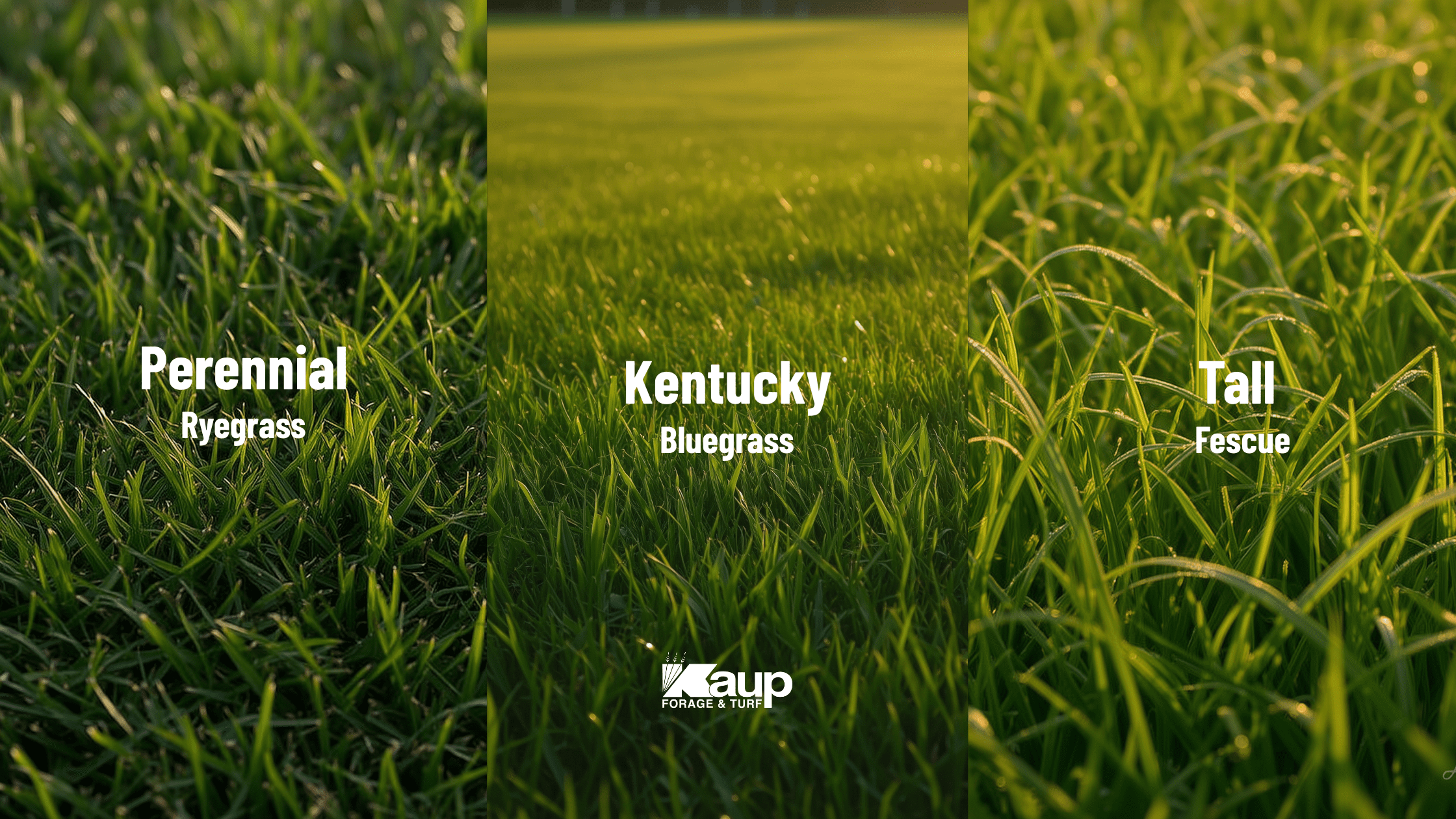
- Perennial Ryegrass: 5–10 days
- Fine or Tall Fescue: 7–14 days
- Kentucky Bluegrass: 14–30 days
Blended seed mixes may germinate at different rates, which is normal and helps create a stronger lawn over time.
Why Quality Grass Seed Blends Work Better
Instead of relying on a single grass type, quality blends combine multiple strengths:
- Fast establishment from ryegrass
- Drought and shade tolerance from fescues
- Color and density from bluegrass
At Kaup, we focus on balanced blends designed to match real-world lawn conditions—not one-size-fits-all solutions.
Frequently Asked Questions About Grass Seed
What Is the Best Seed for Grass in My Yard?
The best seed depends on sunlight, traffic, and maintenance goals. Blended seed options usually outperform single varieties by adapting to different stresses.
Why Does Grass Seed Sometimes Fail to Grow?
Poor soil contact, inconsistent watering, planting at the wrong time, or choosing the wrong seed for grass are the most common reasons.
Do I Need a Special Grass Seed Mix?
Quality seed mixes establish faster, last longer, and provide more consistent results than generic options.
Wrap-Up: Confidence Over Complexity
Choosing grass seed doesn’t have to be complicated. When you understand your lawn, plant at the right time, and use the right seed for grass, everything else becomes easier.
You bring the vision—we’ll help match it with the right mix.
Call us to get connected to a local Kaup dealer for expert guidance on selecting a lawn mix that fits your yard and your goals.